The History of Common Land and Village Greens
The roots of common land date back to the Early Middle Ages - common land was essential for people's survival. The local wasteland provided the essentials of life - food, water and fuel. The first ever Act of Parliament was about commons and was passed in 1235 (the Statute of Merton). The term comes from the fact that at one time in the history of England and Wales there were no owners of land - it was common to all.
The open field arrangement, which is the basis of the common land system today, was mentioned as early as AD688-726. It was mostly arable but some areas remained for grazing and some was kept as meadowland to provide hay for the animals.
In the 11th century the Norman Conquest occurred. Where previously the land may have been worked in common by those who lived in settlements and had cleared the land surrounding their villages, it became more prevalent for the land to pass into the ownership of the lords of the manor. In 1235 the Statute of Merton was passed and this enshrined the rights of the tenants and villagers to use the common land in law, a right which was recognised by the courts.
On the manor there was usually a farm and a manor house. The lord took all the produce from the best (demesne) land. Surrounding the farm were fields of productive land held by free tenants. Here crop rotation began, crops being grown on some and one usually being left fallow. The fields were sub-divided into rectangles and then into strips, each commoner having a strip. Each peasant's strips were spread fairly over the entire manor - some on good land and some on land of poorer quality. What to sow and when to harvest were communal decisions. The fields could not be fenced nor could cattle be let into them until each peasant had reaped his harvest. A team of horses and a plough worked successive strips of the open field for different peasants. The long narrow strips made it difficult to turn at either end. In addition to the field strips, each peasant had a right to graze cattle, collect wood, cut turf and possibly to catch fish. After the summer crop had been harvested the fields were opened up for common pasture.
Permanent meadowland provided hay - these became common pasture after Lammas Day (August 1st) by which time the hay had been cut.
From about the 13th century there were pressures on this system for two reasons. Firstly the wish to change the peasants' rights these scattered strips to more convenient areas of land ideally surrounding his cottage. This was resisted, not least by the peasants, because it eliminated the safeguard on sharing out the good and the poor land. The second reason was that the lord of the manor would try to enclose common land and incorporate it in his own demesne.
Enclosure caused hardship particularly for the poorest peasants who lacked a share in the open field system because they relied on pastures and woods for subsistence. The feudal relationship (payments to the lord in terms of labour) began to give way to a system based on money. This involved the tenant paying the landlord for the land, and the landlord paying the labourer for his work. Those who owned strips of land generally became tenants, serfs became the labourers. With the growth of national and international trade feudal farming of the manor could no longer keep pace with demand.
Initially the number of animals that could be grazed on a common was limited to the capability of the commoners' farm to support them during the winter months - the principle of levancy and couchancy - (literally the number of animals rising and sleeping on the farm). During this time the stint was introduced - shortage of pasture had resulted in quotas sometimes linked to the size of the farmholding. This was later linked more precisely.
At precisely this time the Black Death caused a great shortage of labour (1348-1349). The population fell by about half so the pressure on land diminished. Land and buildings had to be abandoned. Those who survived this catastrophe amalgamated the strips of land whose owners had died, they subsequently became quite substantial landowners themselves, often employing what help they could find. Because of the shortage labourers were able to command higher wages. This however increased the costs for the lords who often decided to let the land out rather than farm it themselves. This all led to the Peasants Revolt of June 1381 when an army of peasants marched from Kent and Essex to London and captured the Tower of London. The Archbishop of Canterbury and the Kings Treasurer were killed. The King, Richard the Second who was aged just 14 at the time, agreed to meet the peasants at Mile End. Basically the peasants' complaints were:-
1) They were afraid that the Lord of the Manor would take away the privileges they had gained after the Black Death
2) They were forced to work two days a week for the church without payment, this made it difficult for them to work sufficiently on their own land to support themselves and their families
3) The introduction of the Poll Tax of 5p a year.
The King agreed to their demands but later reneged on his assurances. The Revolt leader John Ball was hanged and the peasants found themselves once more under the control of the lord of the manor. However for the next hundred years they could demand higher wages because of the labour shortages.
By the 16th century the demand for sheep and cattle, and their products such as wool and leather renewed the pressure on common land. Over-stocking led to the re-introduction of controls. There was also increasing pressure on land for housing and food production. Inclosure was becoming more frequent. There was a need to control the spread of disease in animals which were grazing on common land. Rights of common had legal status so they could only be removed (inclosed) by agreement with the commoners or by recourse to the law by means of a Private Act of Parliament. The land would be surveyed, highways and field boundaries were laid out and the parties (including the commoners) would be granted part of the land by an ‘award'.
The situation in Wales and the Pennine area was different. Rough grazing was far more important here. Up to the mid 16th century a father's estate was divided equally amongst his sons. An entire family would move (complete with livestock) from lowland winter quarters to the uplands. This practise carried on until well into the 19th century.
TOWN AND VILLAGE GREENS
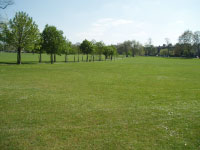
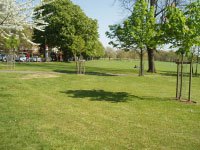
The definition of a town or village green has changed little over the years. Historically they were small areas of land used by the inhabitants of a village for sport and recreation. They may have originally been wasteland of the manor which the Lord of the Manor allowed the villagers to use, this use becoming a customary right enforceable through the courts. The land may also have provided an area on which livestock was collected in times of emergency (everything from bad winter weather to invasion).
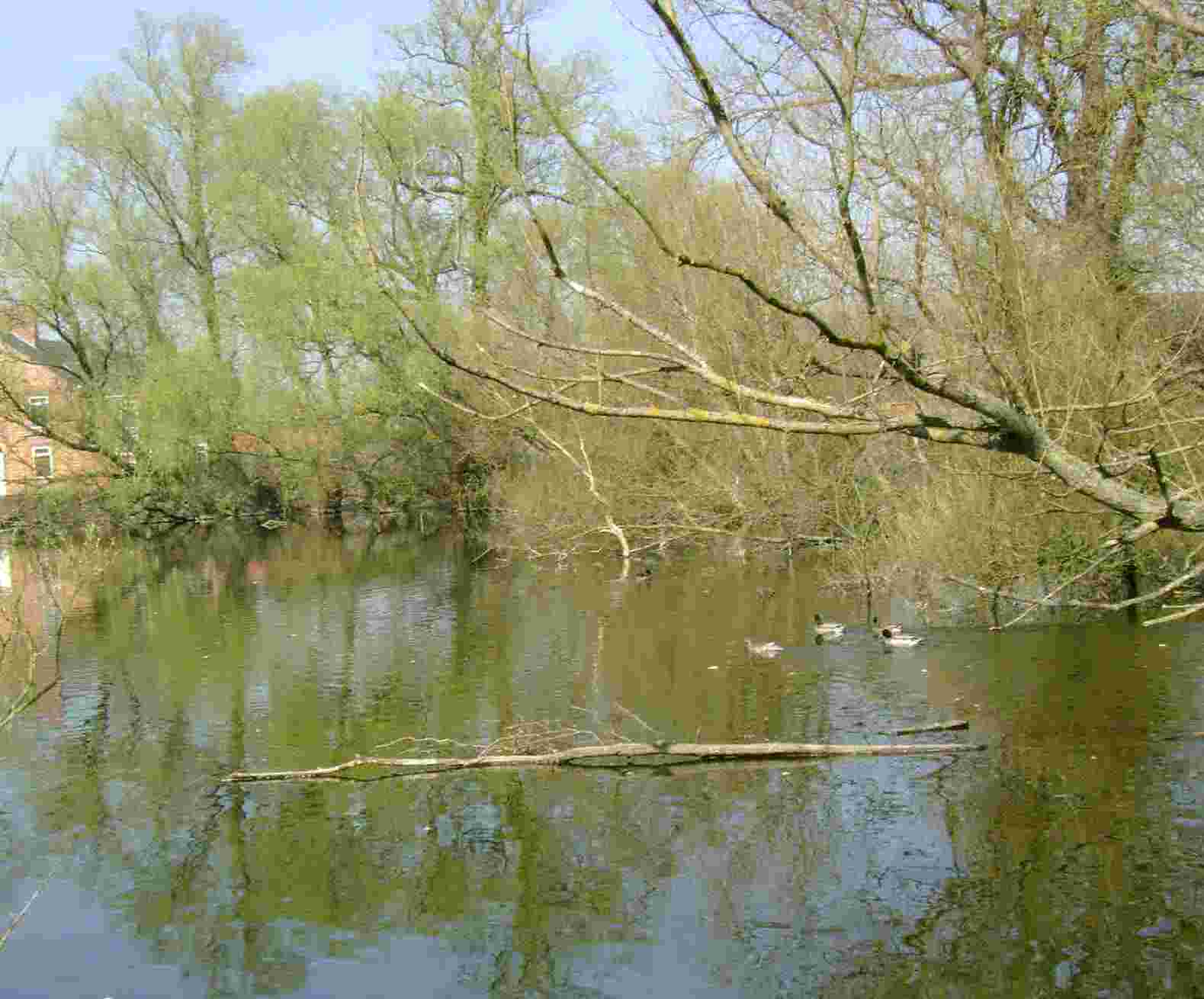
It is traditionally regarded as an area for communal activities - games and fairs, a circus, archery and of course dancing around the maypole. In days gone by the pond on the village green provided the village supply of water. There was a smithy in many villages located on or near the green also a bakehouse and of course an alehouse. The village was often built around the village green.
--------------------------------------------------------------------------------------
Review of Town and Village Greens
ACRA and Natural England Research on Town and Village Green Applications
conducted 2009
--------------------------------------------------------------------------------------